
If you’ve ever felt a sharp or persistent pain on the bottom of your foot, you’re not alone. This discomfort can stem from several common issues, from inflammation and overuse to nerve problems or even the shoes you wear every day sports podiatrist. Understanding what might be causing your pain is key to finding relief—and knowing when it’s time to seek professional advice can make all the difference.

Common Foot Conditions That Cause Pain on the Bottom of Your Foot
You’ll often notice pain on the bottom of your foot caused by common conditions like plantar fasciitis, heel spurs, or metatarsalgia.
Plantar fasciitis happens when the thick band of tissue supporting your arch becomes inflamed People Podiatry, causing sharp heel pain, especially after rest.
Heel spurs are bony growths that develop where your plantar fascia attaches to the heel bone, often causing discomfort during movement.
Metatarsalgia affects the ball of your foot, making walking or standing painful due to inflammation or nerve irritation.
These conditions limit your freedom, but understanding what triggers the pain helps you take control.
Recognizing these common causes empowers you to seek the right care and regain the ability to move freely without discomfort.
How Footwear and Activity Levels Affect Foot Pain
Although foot pain can stem from various medical conditions, the shoes you wear and how active you’re play crucial roles in either easing or worsening your discomfort. Wearing poorly fitted or unsupportive footwear can strain the muscles and ligaments on the bottom of your foot, causing or intensifying pain. High heels, flat shoes without arch support, or worn-out soles don’t give your feet the freedom to move naturally.
On the other hand, staying active helps maintain foot strength and flexibility, but overdoing it without proper footwear can lead to stress and soreness. To protect your feet, choose shoes that fit well, provide cushioning, and support your arches. Balance your activity levels with rest, and your feet will thank you with less pain and greater freedom to move.
When Plantar Fasciitis Is the Reason for Your Foot Pain
When your foot pain centers around the heel and feels sharp with your first steps in the morning, plantar fasciitis might be the cause. This common condition happens when the thick band of tissue connecting your heel to your toes becomes inflamed or irritated.
You might notice the pain eases as you move but returns after long periods of standing or activity. If you want to keep moving freely, addressing plantar fasciitis early is key.
Stretch your calf muscles and the bottom of your foot regularly, wear supportive shoes, and avoid walking barefoot on hard surfaces. Taking these steps helps reduce strain and promotes healing, letting you reclaim your day without that nagging heel pain holding you back.
How to Identify Nerve-Related Pain Under Your Foot
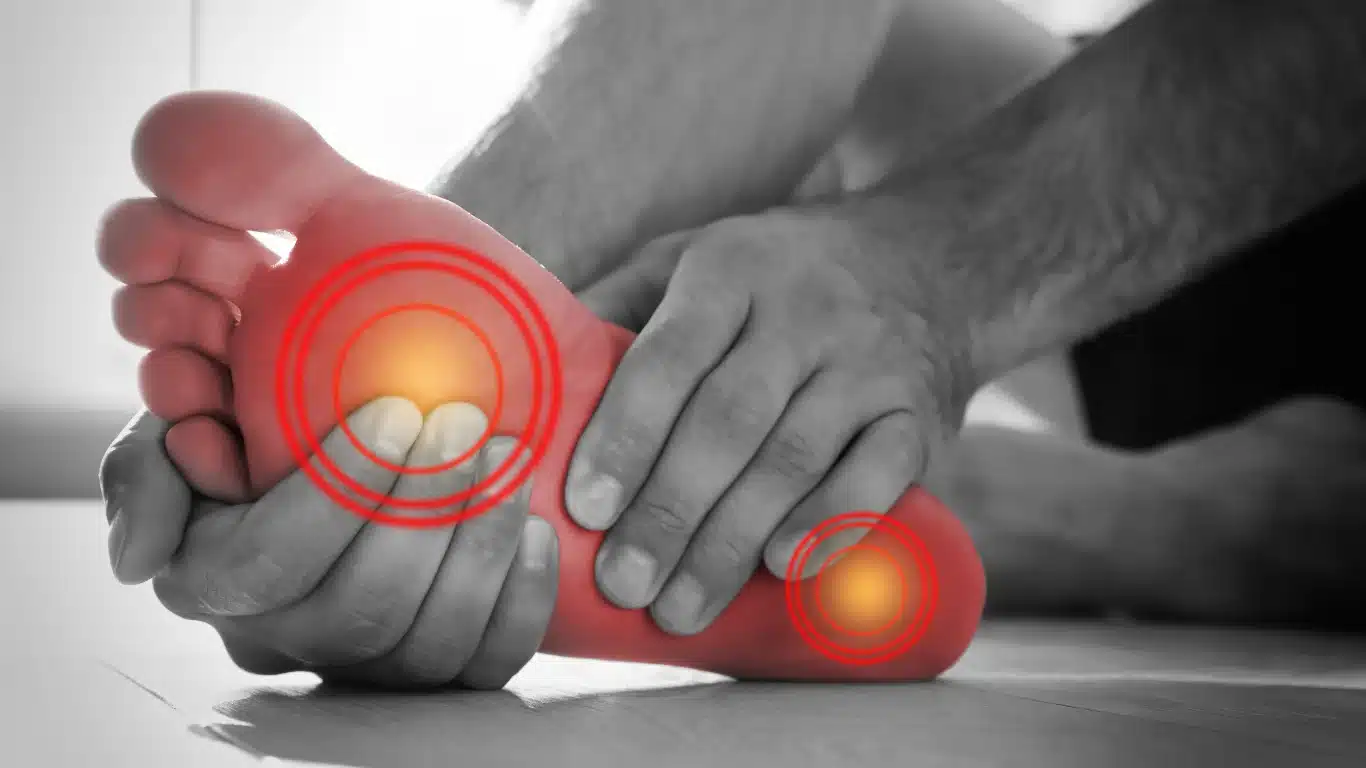
If nerve-related pain causes discomfort under your foot, you might notice sensations like burning, tingling, or numbness rather than just sharp or dull aches. Recognizing these signs helps you understand if nerves are involved.
You may experience:
- A persistent burning or shooting pain that worsens with pressure
- Tingling or “pins and needles” sensations, especially after standing or walking
- Numbness or loss of feeling in parts of your foot
- Pain that radiates from the heel or arch toward your toes
These symptoms often suggest nerve irritation or compression, like from a pinched nerve or nerve damage. Pay attention to how your foot feels throughout the day and during movement.
Identifying these clues empowers you to address the problem and regain your freedom of movement.
When to See a Doctor About Bottom Foot Pain
Nerve-related pain under your foot can signal underlying issues that may need professional attention. If you notice persistent numbness, tingling, or burning sensations that don’t improve with rest, it’s time to see a doctor. Also, if the pain worsens at night or limits your daily activities, don’t wait.
Sudden, sharp pain or swelling could indicate an injury or infection that requires prompt care. You should seek medical help if you experience any foot deformities or open sores that won’t heal, especially if you have diabetes or circulation problems.
Getting a timely diagnosis frees you from prolonged discomfort and helps prevent complications. Remember, your feet carry you through life—taking care of them keeps you moving freely and confidently.
Conclusion
If the bottom of your foot hurts, paying attention to your symptoms and footwear can help you identify the cause. Whether it’s plantar fasciitis, nerve pain, or overuse, understanding these common issues lets you take steps to ease discomfort. Don’t ignore persistent pain—if it doesn’t improve or worsens, seeing a doctor ensures you get the right treatment. Taking care of your feet means you’ll stay active and pain-free longer.


